Driving in Paphos: A First-Timer’s Guide to Cyprus Roads
So you’ve booked the flights, sorted the villa, and now you’re wondering whether to brave driving in Cyprus or just rely on taxis. I’d say drive — honestly, it’s the thing that turns a nice Paphos holiday into a great one. The best beaches, the mountain villages, the little tavernas where the bill comes in pencil on a paper napkin — none of that is reachable by bus.
But I get it. Driving abroad for the first time is a bit nerve-wracking. So here’s a proper, no-nonsense guide from someone who’s been helping visitors find their feet on Cyprus roads for the better part of forty years.
We drive on the left here
This is the one that catches most people out, so let’s deal with it first. Cyprus drives on the left-hand side of the road, the same as the UK, Ireland and Malta. The steering wheel is on the right, the gear stick is on your left, and roundabouts go clockwise.
If you’re coming from the UK or Ireland, you won’t even think about it. If you’re coming from mainland Europe or the US, give yourself a gentle first drive — maybe just from the airport to your hotel — to let your brain catch up. Most people adjust within a day. The mantra at junctions is left, look right, left again. Say it out loud if you need to. Nobody’s judging.
Why your hire car has a red number plate
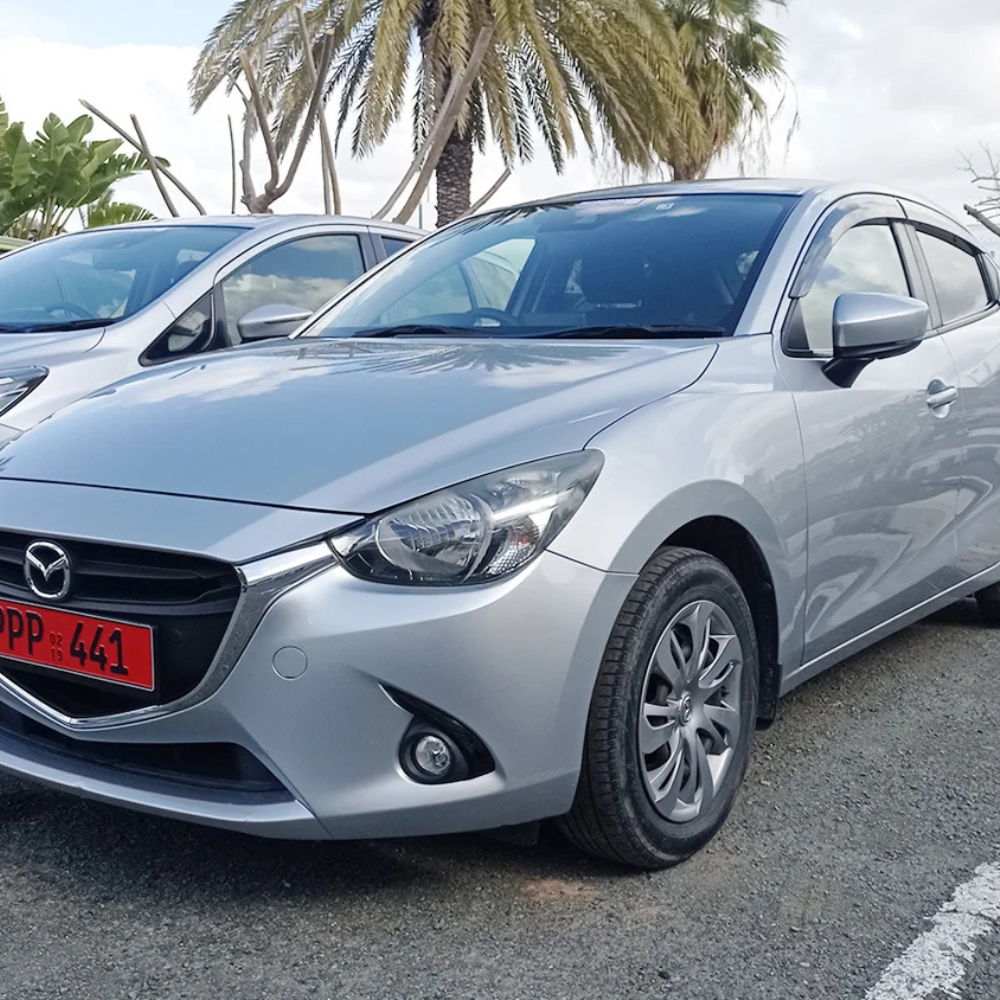
You’ll notice rental cars in Cyprus carry red number plates instead of the usual yellow ones. That’s not a mistake — it’s deliberate. It tells local drivers, “this person is on holiday, give them some room.” And they do. If you’ve got a choice between a red plate and a regular one, take the red one. The extra patience from other drivers is worth it on day one.
The roads are better than you’d expect
Cyprus has poured a lot of money into its road network over the last twenty years, and it shows. The motorways linking Paphos to Limassol, Larnaca and Nicosia are smooth, well-signposted and genuinely pleasant to drive. Speed limit on the motorway is 100 km/h, and unless you’re heading inland during August at lunchtime, traffic is rarely a problem.
It’s the smaller mountain roads where you’ll want to slow down. The road up to Troodos, or the back roads through the Akamas Peninsula, are narrow, twisty, and occasionally shared with a goat. They’re also some of the most beautiful drives you’ll do in your life — just don’t be in a rush.
Road signs in two languages
Almost every road sign in Cyprus appears in both Greek and English, with English usually directly underneath the Greek. Place names can have two or three accepted spellings (Pafos and Paphos are the same place; Lemesos and Limassol are too), so don’t panic if your sat nav says one thing and the sign says another. You’re not lost.
Parking in Paphos: easier than most European cities
Parking in Paphos is genuinely one of the least stressful things about driving here. Most hotels and villas have free parking on-site. In Kato Paphos — the harbour area — there are large free car parks within a five-minute walk of the seafront. You’ll occasionally find pay-and-display zones in the centre of town, but they’re cheap and clearly marked.
A few things to know:
A single yellow line at the kerb means no parking. A double yellow line means absolutely no parking, ever. And whatever you do, don’t park in the spaces marked with blue paint and a wheelchair symbol unless you have a disabled badge — Cyprus enforces this strictly and the fine is steep.
Fuel, speed limits and the small stuff
Petrol stations are everywhere, especially along the main roads in and out of Paphos. Most are open until about 9pm, after which you’ll find self-service pumps that take cards 24/7. Fuel is noticeably cheaper than in the UK or most of Europe, which is one of the small joys of driving here.
Speed limits to remember:
- 50 km/h in built-up areas
- 80 km/h on rural roads
- 100 km/h on motorways
Speed cameras exist, especially on the Paphos–Limassol motorway, so don’t push your luck. Drink-driving limits are very low (0.5 g/L blood alcohol, lower for new drivers) — basically, if you’re drinking at dinner, don’t drive home. Use a taxi for an evening out and pick the car up the next morning.
Roundabouts and right of way
Roundabouts work the same way they do in the UK: traffic already on the roundabout has priority, and you give way to vehicles coming from your right. Indicate left when you’re about to exit. Cypriot drivers can be a bit casual about indicating — don’t take it personally, just assume nothing and watch what cars are actually doing rather than what their lights say.
What about the road to North Cyprus?
This one’s important: don’t take your hire car across the border into the occupied area. Cyprus rental insurance isn’t valid in North Cyprus, and if anything happens — accident, breakdown, even a parking scrape — you’re personally on the hook for everything. Every reputable rental company in the south, ours included, has this rule for the same reason. If you want to visit the north, cross on foot at one of the Nicosia checkpoints and hire a separate vehicle on that side.
Ready to hit the road?
Driving in Paphos is one of those things that sounds intimidating before you do it and then feels completely normal by day two. The roads are good, the signs are in English, the locals are patient with tourists, and the rewards — those mountain villages, those empty beaches, that taverna you stumbled on by accident — are worth every kilometre.
If you’d like a hire car waiting for you at Paphos Airport or delivered straight to your villa, get in touch with us for a no-obligation quote. We’ve been doing this for nearly forty years, and we’d love to help with your trip.